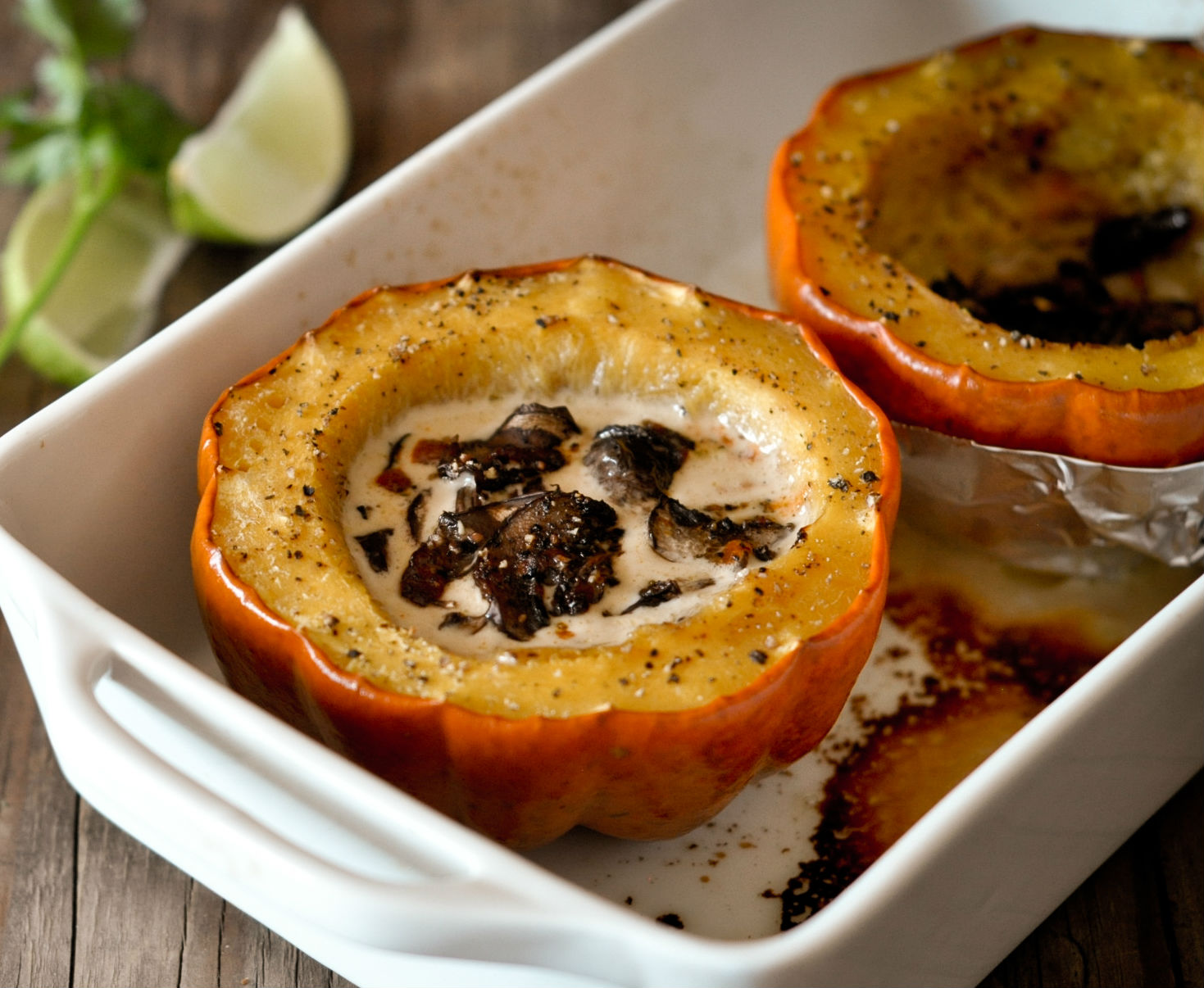
Squash comes in winter and summer varieties. Winter types tend to have tougher skin and more fibrous flesh. Some varieties can be stored for months in a cool dry place.
Squash is one of the most versatile vegetables going. It's delicious eaten either hot, or cold in a salad. And it's great for adding bulk to a dish.
How to cut a squash
To cut a squash, place a wet cloth under a chopping board to stop it from slipping and use a large, sharp knife. Rock the knife back and forth to work it through the squash.
The skin can be left on if it’s tender enough or if the squash is being cooked in the oven (the flesh is much easier to scoop out after roasting). Otherwise, remove the skin using a peeler. If it's very thick, use a knife to cut it off in segments.
Cooking
If you are cooking it whole, pierce the skin a few times to let the steam escape and prevent it from bursting.
Squash can be roasted whole (stuffed or not), or in chunks. You can steam it too, or let it simmer in a curry. An easy way of using up a big squash is to roast it and then use it in different dishes throughout the week.
Use the seeds
The seeds can be eaten as a snack, sprinkled on salads, used in pesto, or even a gremolata! After scraping them out, give the seeds a rinse to remove as much of the flesh and stringy bits as possible. Pat them dry. Toss them in oil and salt then fry, or spread them out on a baking sheet and roast at 180°C for 10 - 15 minutes, stirring them part way through. They're done when they are golden brown and slightly crispy.